
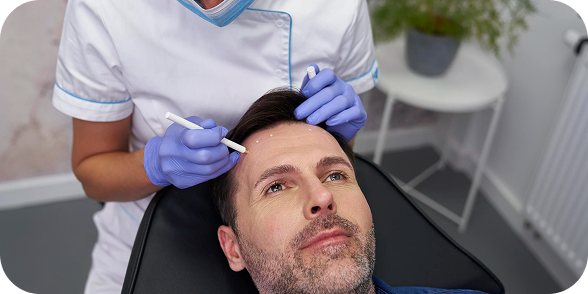
PRP (Platelet-rich plasma) therapy is a treatment for hair loss that involves using a person’s own blood plasma, which is rich in growth factors, to promote hair growth. The process involves drawing a small amount of blood from the patient, processing it to concentrate the platelets, and then injecting the concentrated plasma into the scalp.
PRP treatment is believed to stimulate the hair follicles and promote hair growth by delivering growth factors and nutrients directly to the hair follicles. Studies have shown positive results for PRP therapy in promoting hair growth. PRP treatment for hair loss is non-surgical and minimally invasive, with few reported side effects. PRP (Platelet-Rich Plasma) treatment for hair loss is considered a safe procedure, but like any medical procedure, it does carry some risks and potential side effects, including:
It’s important to discuss the potential risks and benefits of PRP treatment for hair loss with a qualified medical professional before undergoing the procedure.
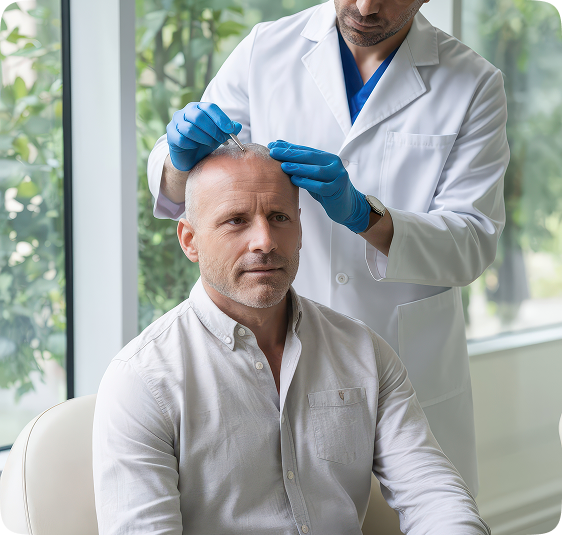

PRP (Platelet-Rich Plasma) treatment is highly effective after a hair transplant because it enhances healing and promotes stronger hair growth. PRP is derived from the patient’s own blood and is rich in growth factors that stimulate hair follicles. When injected into the scalp post-transplant, PRP accelerates tissue repair, reduces inflammation, and boosts blood circulation around the newly transplanted follicles. This not only aids in faster recovery but also strengthens the hair follicles, leading to improved hair density and thickness.
Additionally, PRP helps minimize the risk of shock loss—a temporary shedding of transplanted hair—by nourishing the follicles and creating a healthier scalp environment. The growth factors in PRP also encourage dormant hair follicles to enter the growth phase, maximizing the overall success of the hair transplant. In summary, PRP treatment is a vital component in ensuring the long-term success and vitality of a hair transplant.
Platelet-Rich Plasma (PRP) treatment works by using your own blood to promote hair growth. A small amount of blood is drawn and then processed in a centrifuge to separate the plasma, which is rich in platelets and growth factors. This concentrated plasma is then injected into the scalp, specifically targeting areas experiencing hair thinning or loss. The growth factors in PRP stimulate hair follicles, enhance blood flow, and encourage the natural hair growth cycle. PRP is a minimally invasive procedure, often used in combination with other treatments, to help strengthen existing hair and promote new growth.
Not necessarily. Every surgical procedure entails a certain degree of discomfort, even if it’s just the sensation of the needle during anesthesia administration. While most procedures are relatively painless, many patients experience minimal to no discomfort both during and after surgery.
Not necessarily. Every surgical procedure entails a certain degree of discomfort, even if it’s just the sensation of the needle during anesthesia administration. While most procedures are relatively painless, many patients experience minimal to no discomfort both during and after surgery.
Not necessarily. Every surgical procedure entails a certain degree of discomfort, even if it’s just the sensation of the needle during anesthesia administration. While most procedures are relatively painless, many patients experience minimal to no discomfort both during and after surgery.